Two Floors Up A Pipe Burst

So I was sitting in my chair reading a bit before bedtime last night, when I heard spattering from the dining area. I knew that sound! It’s the sound of water! I recognize it because the unit above mine sent water into my bathroom whenever the resident took her bath before she fixed the problem. This time it’s in an area where there’s no plumbing.

So I headed upstairs to the unit not directly above mine, but one unit over. I knocked. No answer. But I could hear water. So I went back downstairs and quickly looked up their phone number, but I was flustered so I couldn’t figure out the number.

Instead, I rapped on the door of the building manager across from me. She sounded grumpy when she yelled from the other room What is it? Being that it was after 11, I wasn’t surprised. I answered, We have a water situation I answered as she came to the door talking on a cell phone. (She was on her cell phone dealing with other grumpy residents about parking spaces.) She poked her head out of the door and I pointed down the hall to a puddle of water expanding across the hallway. I can hear water in 205, but no one answered when I knocked I told her.

She hurriedly looked through her sets of keys for 205 as well as her phone list and we headed upstairs. She seemed a little loopy. (That would turn out to be the sleeping pill she took 15 minutes earlier; I envy her night even less than my own.) I had her read off a number for me to call on the cell, but she stopped me just after the first ring. Wrong number. Had me dial a different one. Also no answer, so I started leaving a message while she tried to unlock that unit. But I was botching that call so I handed it to her. She didn’t realize it was their voice mail for a moment or two and started trying to talk to someone. Then she left a message telling them she needed to enter their apartment for an emergency. But she couldn’t get her keys to work.

Then I realized the water sounds coming from behind that door were not quite right. I told the manager I bet that 305 might be having problems too. So we climbed one more flight of stairs and sure enough could hear water from that unit. It sounded more like a spray than cascading water like the unit under them. However, no one was home at that unit either. The manager realized she had her own cell on her, so she called that apartment’s owner to tell him we were going in. Then she headed downstairs to find keys.

She returned with the keys and unlocked the door. Water everywhere inside. The water was coming from the toilet tank. But the manager was loopy and started freaking out about getting a plumber there quickly. or finding the correct shut off for the unit. I looked for the faucet knob under the toilet and quickly shut it off. That crisis averted. It was actually a plastic hose that burst.

Units 305, 205 and 105 were all unoccupied last night. If any one of them had residents, the damage would have been much more limited. As it is, the flooring in 305 is probably ruined. The ceiling in the bathroom in 205 looked to be falling apart. Luckily the water didn’t spread beyond the bathroom there. But the floor for my floor is cement, so the water hit it inside the walls and just spread out. 105 had a half inch of water in three rooms, and several walls were soft to the touch.

My damage: well, I slipped on a puddle of water in my kitchen not realizing water had actually entered my apartment. Biffed it big time, wrenching my shoulder pretty good when I over-extended it catching myself. I can’t lift my arm without a fair amount of pain. It’ll be fine in a few days though.

The carpet in my dining area was soaked. The ceiling in my dining area has some soft spots, and water came through the track lighting in the kitchen and down the wall behind one set of cupboards. Not anywhere near as bad as the empty 105. I don’t know yet what parts will need to be replaced.

The building manager called ServPro to come start drying the building out. That guy left sometime between 5 and 6 a.m., but he finished in my place around 4:30 a.m. He left two giant fans and a heavy duty dehumidifier. They are running quite loudly. Right now it sounds like I-5 runs through my condo.

Two Fans and a Dehumidifier

After he left and the fans were running, I was about to finally climb in bed. Then something got me thinking about the light fixture in my dining area. It was off. It had been on. I turned the switch off, then examined it closer. It looked okay, but I had a sneaking suspicion. It took me five minutes to twist the fixture out, what with a messed up shoulder as well as what turned out to be a few extra pounds of water filling the fixture. The light bulbs were under water.
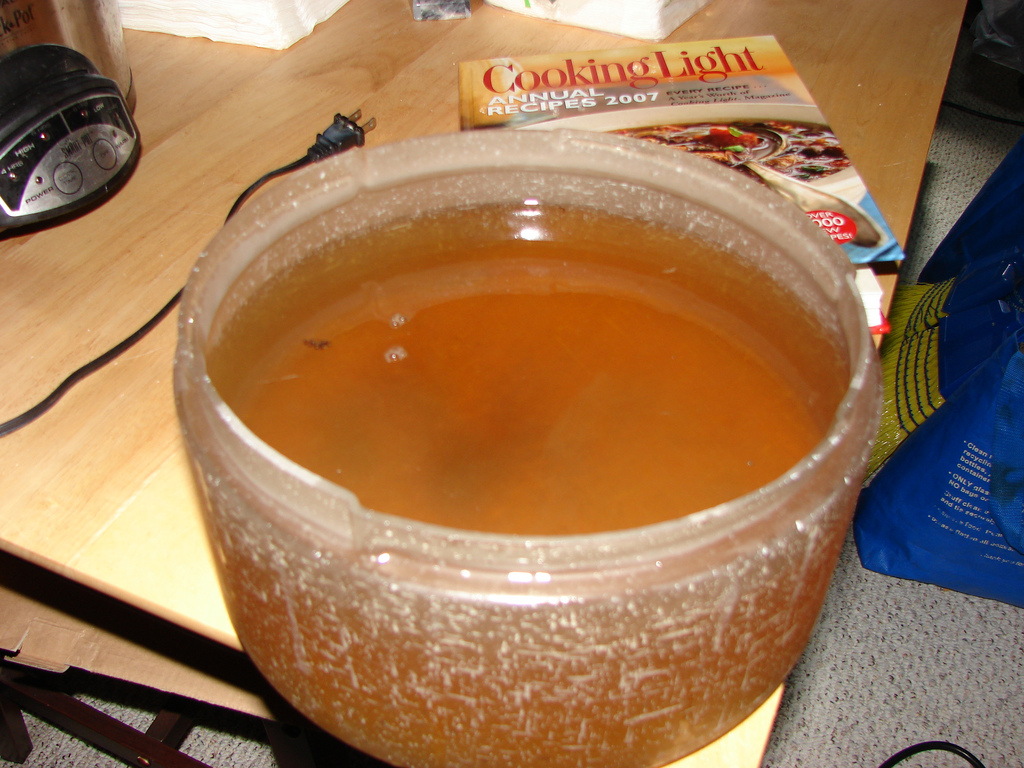
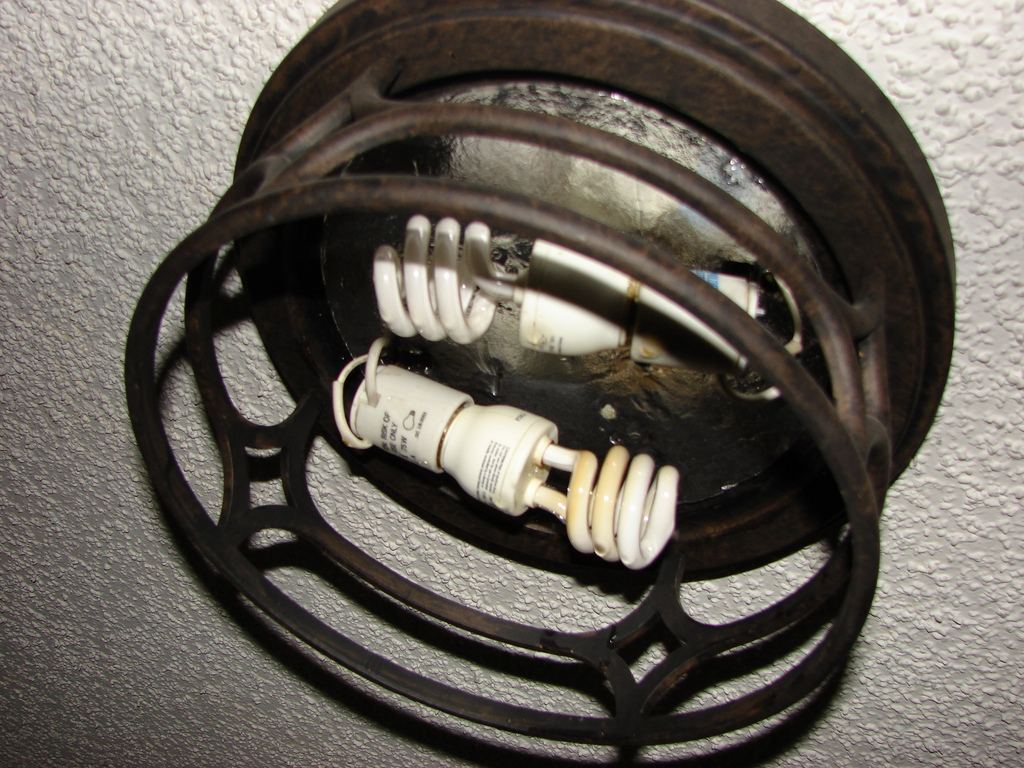
A gallon of water in a light fixture
Where the water was
Where the water was

Not a good end to my weekend.

Pietoberfest is October 3rd!

Before I forget, the next Pie Night will be October 3rd. Save the date!

Update: Due to a schedule conflict, Pie Night will be October 17th.

Except it won’t be Pie Night. It’ll be Pietoberfest!

Location: 2301 Fairview Ave E Apt 107, Seattle (my place).

Time: Afternoon through late.

As always, all that’s required to attend is that you like pie. RSVP is requested, however so I can have a head count.

Further promotional posts to follow.

Family history

My mom never talked much about family history. But driving my grandfather around the last 6+ months I’ve learned a ton that I didn’t know before.

  • Gramps’ mother’s family was Reorganized Church of Latter Day Saints, but Gramps quit the church after his mom died. He was irritated that none of the church members his mother had loaned money to would repay. Gram also said he wasn’t too happy that the church changed it’s name a few years ago. Even so, he’s contacted one of the local churches because he wants to have one of their ministers conduct part of the service when he’s buried.
  • I’d thought he’d grown up in Ballard. He graduated from Ballard High School, but his family moved around a bit before that. Around 10, he was living off Delridge near where Chief Sealth High School is.
  • I’d thought his dad had grown up in Western Washington. His mom did, and his grandmother came to Western Washington in the late 1800s, but the Hathaways came here in the 20s from North Dakota.
  • My great grand-father wasn’t born Otto Hallin. His original name was Otto Omaan (sp?). He changed it after the Great War when he got his citizenship. Supposedly he knew a Hallin in the Army.
  • Two of Otto’s brothers returned to Sweden rather than serve in the Army during the Great War. Otto nearly disowned them. Gramps thinks this is why he changed his name.
  • My great grandmother’s maiden name was Nordwall (sp?). One of her brothers shortened it to Nord when he became a citizen.

I’m sure there’s more, but that’s what I remember of his family stories off the top of my head.

Nuclear test

The last few days have been hectic to say the least. Most of it bad, but not all. Here I shall write about the bad stuff.

Thursday I got a call from Gram. Sort of. She called, but didn’t realize I’d picked up. I could hear her talking to a nurse in the background saying her phone wasn’t working and asking the nurse to call me. Nurse asking for my number. Gram not knowing. I hung up and called Gram thinking the nurse would hear the ring and show her how to answer, but I got voice mail. While I called, the nurse called me and I still haven’t figured out how to switch calls on call waiting, so that went to voice mail. But at least now I knew what hospital.

Gramps was feeling pressure in his chest and short of breath. So he called 911 and went to the ER. They don’t know what’s wrong exactly, though whatever it is isn’t as bad as the heart attacks and blod clot he had in December/January. He’s definitely weaker than he was a couple of weeks ago. And he definitely had more fluid than he should around his heart. They upped his dosage of ferosimide (I probably misspelled that) to get him to piss away the fluid. He’s lost about 7.5 pounds in 4 days, with no bowel movements (which is beginning to be an issue).

Tomorrow morning they’ll put some nuclear material in him and watch it go through his heart on a machine. I don’t know if they’ll send him home afterward, or if they’ll be keeping him.

Meanwhile, I’ve been driving Gram there to visit every day, and spending a fair amount of time with her outside the hospital. Her dementia has been pretty bad, and Gramps didn’t want her to be alone for too long. He’s said they need to hire help, and I think he means it this time. He’s withered in the face of Gram’s opposition before. We even had a conversation with Gram, and she seemed more resigned in her opposition than obstinate. It’s a good, albeit minor, sign as far as I am concerned.

My aunt Gail arrived today to help out watching Gram. One of the things she wants to do is go look at assisted living places with me. We’re hoping that Gramps’ doctors insist on something like that. Both Gram and Gramps need it.

Me, I’m a ball of stress. I’ve gotten very little sleep. But I’ve also taken some time for myself as well. Unfortunately, that cut into my sleep, but it was worth it.

I haven’t forgotten the Walk to Defeat A.L.S. I have half an article on drugs written up, and hopefully I’ll get time to finish it within the next few days. In the meantime, my Walk to Defeat A.L.S. page is still up, and still taking donations.

Dynavox

A Dynavox DV4
A Dynavox DV4

I barely remember mom’s voice. The last time she tried to talk to me was over the phone after a family vacation to Ocean Shores. I left a day early because Erin needed to get back to work. On the way home, mom called to ask me something. I couldn’t understand a word she said.

Dad fared better than I did. He was able to interpret mom’s grunts four or five months longer than I could.

At the first A.L.S.A. support group meeting mom went to, someone there loaned her a Dynavox. Basically a talking computer. It has a touch screen that lets you pick letters or words. It has a computer generated voice that speaks what you’ve typed. It’s portable, at least compared to a laptop. Thing weighed more than my laptop though. But it’s design makes it more usable for carrying and speaking than a laptop. Under the hood it ran Windows CE, so it had typical Windows stability issues. The new versions run Windows XP.

Mom had a love/hate relationship with her Dynavox. I asked her to practice with it before she needed to use it. I figured it would be easier to solve any problems with it when she could still talk. But she didn’t. It was too slow. And it was too much like giving up. So she only started using it after her speech was nearly gone.

A Dynavox is a pretty versatile machine, but it’s not designed specifically for A.L.S. patients. It’s primary users are seriously mobility impaired, paralyzed, or with severe loss of fine motor control. Eventually mom got to that point, but not until the last few months she was alive. A.L.S. patients tend to lose their speech either near the beginning of their illness (in the case of bulbar onset A.L.S.) or near the end (in limb onset A.L.S.). There are exceptions, but these are the general cases.

For those with bulbar onset A.L.S., using the touch screen is pretty slow. You can use a U.S.B. keyboard with a Dynavox. Mom could still type 60+ words a minute. So she didn’t slow down that much actually at first. The problem was that you couldn’t map any key on the keyboard to be speak or clear. So she’d have to reach over to the touch screen to make it say what she’d typed. And then she’d have to reach over again to clear it so she could type her next sentences.

Even so, she talked slower than she used to, but was still just as wordy as ever. For instance, Mom would still preface her statements with To answer your question … followed by the answer, rather than just answering. I constantly battled with having the patience to wait for her to get through her wordiness with a slower mode of communication. Not everyone had the patience. Having visitors over would be difficult because while they waited for mom to type something, they would continue the conversation with other people in the room. By the time mom pressed Speak, the conversation would have moved on.

As mom lost the use of her hands, it became more difficult for her to type. Again the A.L.S.A. helped out, this time with buttons and switches and a giant trackball. Instead of typing, she would use the trackball to click on stuff on screen. It was slow, but the Dynavox has built in word prediction, something like what cell phones do.

The A.L.S.A. actually helped out with two Dynavox machines. While they are pretty sturdy, they don’t stand up to repeated abuse. Mom’s Dynavox got dropped a few times. Eventually it stopped working. Once when the U.S.B. port was damaged. Another time when the screen stopped responding. Both times the A.L.S.A. had a second machine for mom to use while the original was getting repaired.

At $7500 a pop, that’s a hell of a lot of help. Mom had pretty good insurance, but they didn’t cover communication. Speech aids were specifically excluded. Most A.L.S. patients don’t have insurance coverage for A.A.C. Without the A.L.S.A., they’d be S.O.L.


This is one of a number of articles I’m writing to bring up awareness about A.L.S. and to encourage donations to the 2009 Walk to Defeat A.L.S. I’ve set up a donations page to collect money, where donors can claim one of over 100 books as a thank you gift. If you don’t have the money to donate, you can help by publicizing and linking to that page. I’ll be giving away a signed book by Elizabeth Bear for those who help publicize the drive (and more prizes will be forthcoming). More information on that offer can be found here.

Bulbar onset

The two most famous cases of A.L.S. are that of Lou Gehrig and Stephen Hawking. Stephen Hawking’s illness is somewhat atypical for A.L.S., in that most patients with the disease have a lifespan of 2 to 5 years after diagnosis. Longer lived patients survive 10 to 15 years. If indeed the underlying disease is A.L.S., Stephen Hawking is the longest surviving patient ever.

Lou Gehrig’s performance as a Yankee started declining in 1938, mostly his power at the plate. By 1939 he was having problems running the bases, fielding balls, and connecting with pitches at all. After 2,130 consecutive games played, Gehrig benched himself. Weeks later he went to the Mayo Clinic where he was diagnosed with A.L.S. Two years later he died.

Stephen Hawking first noticed symptoms when he was rowing. He didn’t have the strength he previously had, and then he started falling down. Over the next 40 years, he has gotten progressively worse. At this point in his life, he uses his cheek to control his speech A.A.C. device.

The first symptoms of A.L.S. that mom noticed were that her tongue and throat felt odd. Not loss of strength in her arms or legs. We (her family) started noticing that she slurred her words, and my brother and his wife talked mom into seeing a doctor. She got her diagnosis in March 2007 and lived 18 months afterward.

The prognosis for a patient with A.L.S. can’t be determined with specificity. Some patients live longer than others, and the reasons why are largely unknown. In two visits to the A.L.S. clinic at Virginia Mason, the doctor there refused to even speculate. For one, he thought knowing lowered the morale of the terminally ill. But the main reason was that there just isn’t any way to predict.

One thing that is known is that people with bulbar onset A.L.S. tend to have symptoms that progress faster than patients with limb onset. Bulbar onset is when the first symptoms show up in the function of swallowing. The medulla oblongata is also known as the bulbar nerves. They control the muscles that effect speaking and swallowing. Typical limb onset A.L.S. affects all the limbs first, sometimes progresses to the bulbar nerves, and lastly affects the diaphragm. For some reason that generally seems to take longer. Bulbar onset affects those nerves first, followed by arms and/or legs, and finally the diaphragm. In mom’s case, the decline in her breathing came concurrently with the loss of function in her arms and legs. And the prognosis, rather than the 2 to 5 years that most limb onset patients might expect, is 18 months to 3 years. Mom’s illness fell at the short end of that range even.

Bulbar onset has a whole different set of challenges than limb onset. Communication and eating are the first set of concerns for bulbar onset patients. Mobility and strength are prime problems for limb onset patients. Mom didn’t lose enough strength in her legs for that to be a serious concern until the last few weeks she lived. Another patient we knew didn’t lose the ability to talk or swallow ever. Because of the differences, in the early stages the same disease doesn’t even resemble itself.


This is one of a number of articles I’m writing to bring up awareness about A.L.S. and to encourage donations to the 2009 Walk to Defeat A.L.S. I’ve set up a donations page to collect money, where donors can claim one of over 100 books as a thank you gift. If you don’t have the money to donate, you can help by publicizing and linking to that page. I’ll be giving away a signed book by Elizabeth Bear for those who help publicize the drive (and more prizes will be forthcoming). More information on that offer can be found here.

2009 Walk to Defeat A.L.S.

As most of my friends know, last October my mom died from Lou Gehrig’s disease, officially known as A.L.S. I moved to Bellingham for a year to help take care of her. A.L.S. is an ugly illness. While patients with A.L.S. don’t typically experience a lot of pain, they do lose independence and quality of life. Mom had to eat through a tube, wear a brace to hold her head up, and talk with a computer. I heard that computer so much the last year that I don’t remember much of mom’s actual voice.

My part to see that as few people go through this as possible is to support the Evergreen Chapter of the A.L.S. Association. They fund research into A.L.S. and lobby on behalf of patients. For those who are afflicted, including mom, the A.L.S.A. was a lifeline of support. That computer? Provided by the A.L.S.A. Her hospital bed? Provided by the A.L.S.A. When the family first met with hospice, Mary from the A.L.S.A. was there. When mom saw specialists at Virginia Mason’s neurology center, Mary from the A.L.S.A. was there.

The A.L.S.A. holds the 2009 Walk to Defeat A.L.S.A. in Bellingham in September. Until then, I’m going to write a lot about A.L.S. to educate and to get people to donate money. My family has a team, and I’ve set up a page for donations.

If you donate money, I’ll give you a book. I need shelf space, so why not solve two problems at the same time. Books aren’t just the crappy books either: advance reading copies, autographed copies, hardcovers. Here’s the list of books. More information about mom, how to donate, and how to get your book at my walk page.

Coconut Pie

This recipe comes from Farm Journal’s Complete Pie Cookbook, which I picked up for free outside Michael’s Books in Bellingham. It worked out pretty good, though I might do something slightly different next time. Instead of coconut flakes, I might use shredded coconut. Since coconut doesn’t soften too much during the cooking, it resulted in kind of a crunchy/fibrous texture. That was minor though. Turned out to be an excellent pie, and pretty easy to make.

As always, recipe is how I made it, not exactly how it appears in the cookbook.

  • unbaked 9 inch pie shell
  • 4 egg whites
  • 1 teaspoon nutmeg
  • 1/8 teaspoon salt
  • 2 teaspoons vanilla extract
  • 2 cups sifted confectioners sugar
  • 1½ cups flaked coconut
  • 2 cups milk
  • 2 tablespoons butter
  1. Combine 2 egg whites, nutmeg, salt, vanilla, sugar, coconut, milk, and butter.
  2. Cook over hot (not boiling) water in a double boiler for 5 minutes or until mixture thickens slightly.
  3. Let cool to room temperature.
  4. Beat 2 egg whites just until stiff (but not too stiff). I’ve never been able to beat egg whites to stiffness anyway, so this wasn’t a problem.
  5. Fold beaten egg whites into coconut mixture.
  6. Pour into pie shell.
  7. Bake at 450° for 30 to 40 minutes, or until filling is firm in the center.
  8. Cool and let it set.
  9. Put pie in refrigerator overnight and serve cold.

No pictures of my finished work this time.